

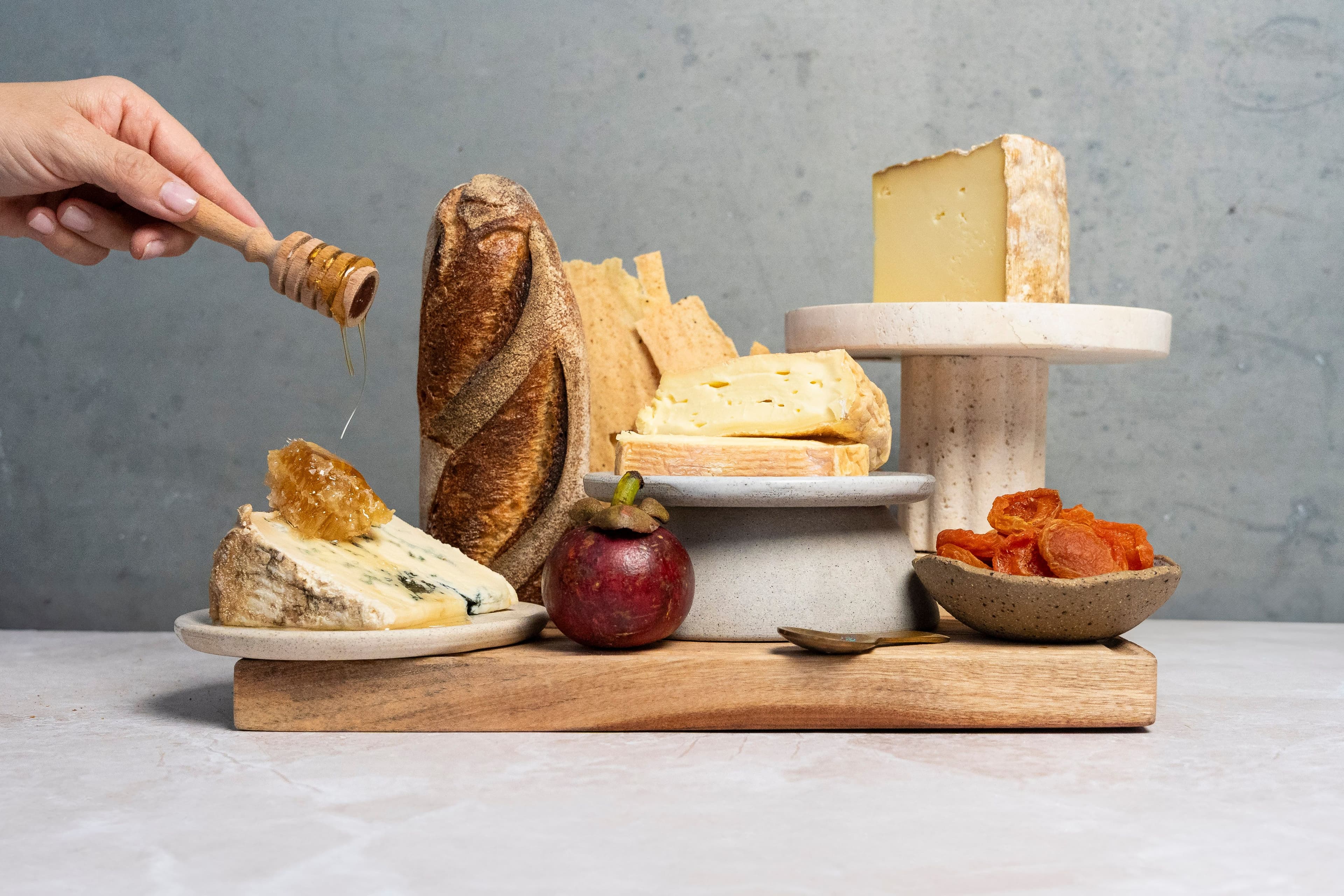
Blessed are the cheese boards
A guide to assembling a cheese board, or platter, with both elegance and intent. Kate Gibbs writes
It’s like the watercooler of the modern gathering. The cheeseboard is the place everyone wants to be, where all the best conversation is happening. A stalwart of any decent dinner party, an imperative with cocktails, and just the thing for the host to set an elevated tone, the perfect cheese board is a culinary artform that can be mastered with a few simple rules.
A well-composed cheese plate is more than something to serve with drinks, or to signal the end of a meal. At its best, it’s a moment of theatre — generous, grounding, and quietly extravagant. But it’s also where many hosts get stuck, presenting heaving trays filled with endless and conflicting nibbles, or something fresh (and still cold) out of the plastic wrap from the supermarket.
While the format is timeless, the best modern cheese plates now lean more towards intentional simplicity than maximalist sprawl. From the rough-hewn wedge on a timber board to the delicate pairing of local blue with raw honey, the best examples tell a story — not just of a region or style, but of the person who’s assembled them.
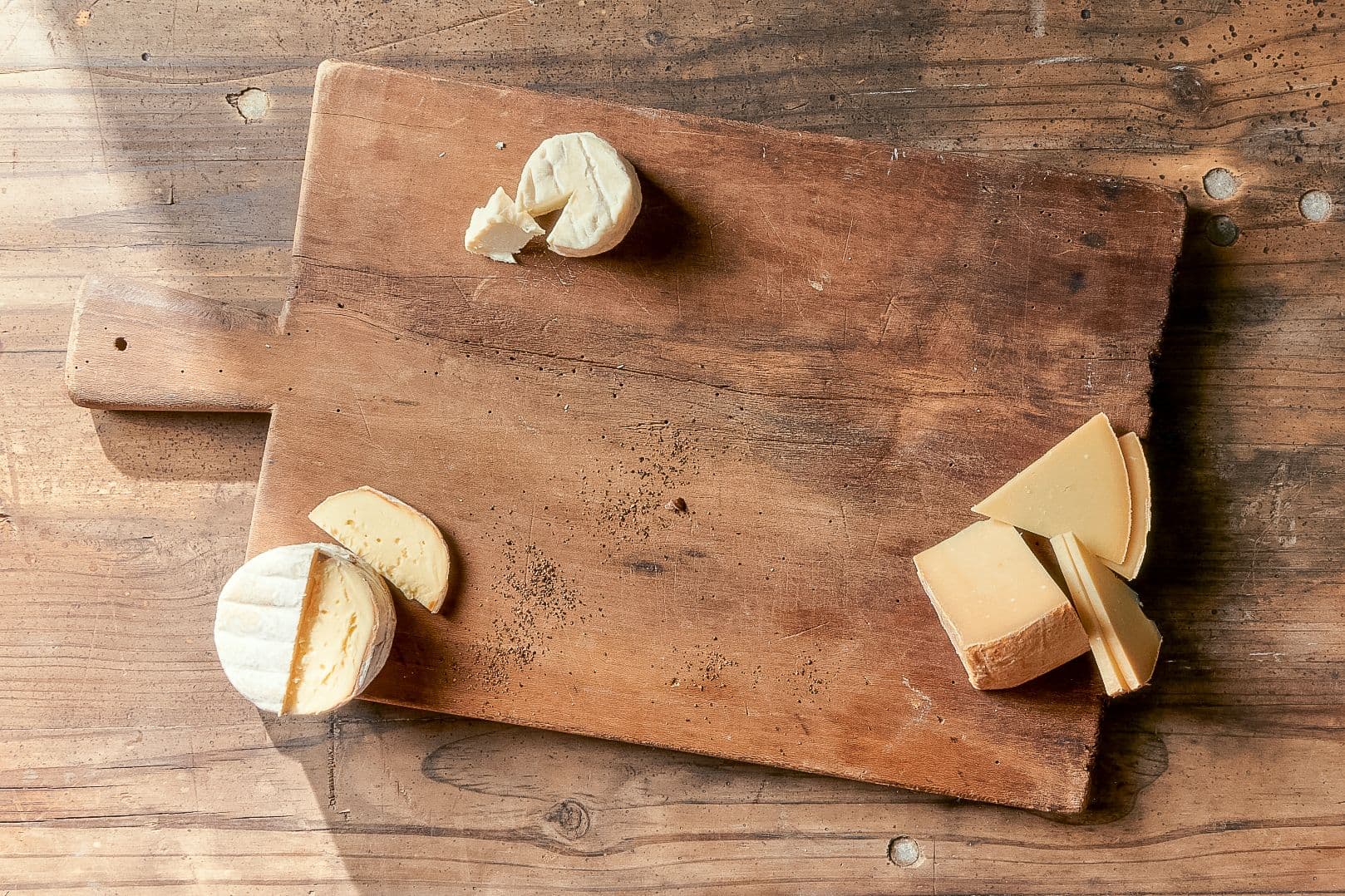
Why do we serve cheese plates?
At any gathering, a cheese plate is a “safety zone” to rub shoulders with other guests, says Ellie Studd, one half of the Studd Siblings, whose father Will Studd is an iconic Australian expert on cheese. Ellie and Sam have recently released their first book The Best Things in Life are Cheese (Plum Books). She argues that a great cheese board can offer a moment where people can stop and connect.
Ellie and brother Sam have travelled Australia and the world, working with celebrated mongers and makers, and learning to make, mature and sell cheese. For Ellie, who now works with her brother and father to curate artisan cheeses for the Selected by Will Studd range, the ritual of building a board is as much about intention as it is about aesthetics.
“My favourite part is giving someone amazing cheese and then watching their face as they explore it. I think it can do a lot.”
She describes one approach that leans into that simplicity. “One of our favourites is what we call the ‘rock star’ cheese board. You just put one hunk of cheese out, stab a knife in, and keep it really rustic. That cheese becomes a talking point. Maybe you’ve got a snippet from your cheesemonger or you need to look it up — but that story becomes enough.”
How to match wine with a cheese platter
Red wine, actually, isn’t great with cheese. Cheese, being high in fat, can coat the mouth, leaving even best quality red wines without flavour, and not enough acidity to cut through the fat.
According to Carlos Simoes Santos, co-founder of My Sommeliers Wine Club, red wine is a tricky choice and those with high tannins can clash with cheese.
Instead Carlos suggests Champagne or sparkling wine as a simple match for a cheese platter with various cheeses. Cheese is “nice with the bubbles. It's the acidity. Because obviously the Champagne, which is made from very high acidity, almost almost unripe grapes. So that brings a lot of freshness or crispness, and that's why, that's why they're so versatile”.
For more creamy cheese, Champagne or an Australian sparkling is the easiest wine to match, agrees Ellie Studd. “Cheese is like fat, salt, protein and then the effervescence in a wine makes it all work. The fat of the cheese kind of coats your mouth and then the effervescence of a sparkling drink removes all that so you can actually taste it,” she says.
Ellie says she often serves cider with cheese. It has the effervescence, as well as a sweet fruitiness that works well. In Los Angeles, she says, she has seen cheese matched with kombucha, a modern response to the tee-total movement while giving the ideal sparkles. A kombucha can go with a washed rind cheese, she suggests, or a goat's cheese.
Carlos turns to a more traditional option, in port. “Why? Because port is sweet and the cheese is salty. It's perfect. If you prefer something drier, then Champagne [or sparkling wine] works, because of the bubbly sensation. It cleanses, it rinses the palate from the fattiness of the cheese.”
How many and what cheeses go on a perfect cheese board?
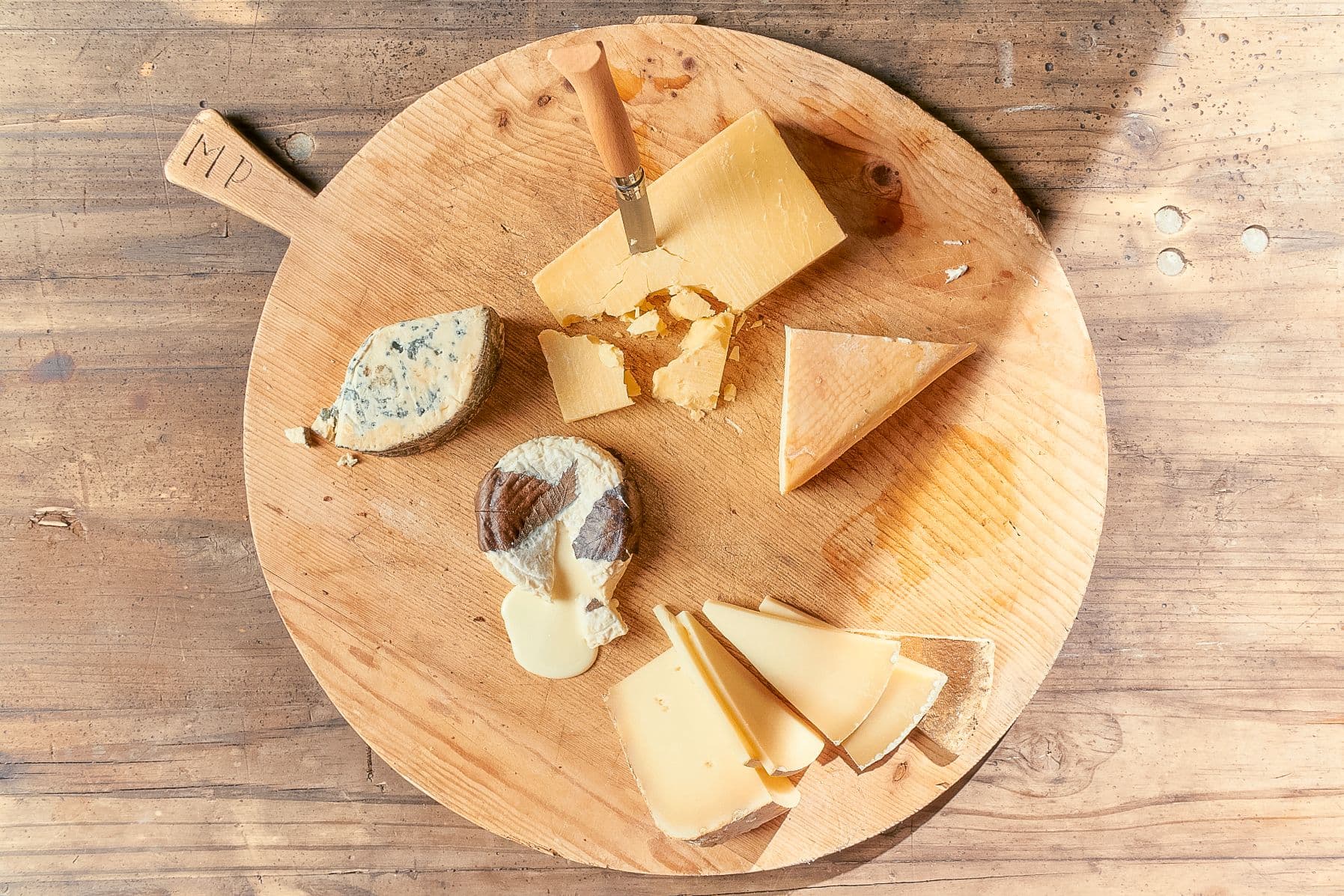
“Don't go overboard,” says Ellie. “I like odd numbers. So one, three or five cheeses, and don't overthink it, it should be fun.” But if you're going for three, she advises thinking texturally. “So, a soft one, hard, and you can do a stinky.”
Texture isn’t the only balancing act. “Go back to that safety bubble. Do an accessible one that people are kind of familiar with, like a dreamy, creamy one. Start there,” Ellie says. “Yeah, I think it's different textures, different flavours you want to be taking your guests on, that mild-to-wild kind of journey.”
Start with a cheese like Will Studd Le Dauphin Double Creme. “It's inhaled. It's our inhale cheese. Choose an accessible one, one that you inhale, one that you have to chew. And then something close towards the wild part of the journey,” says Ellie. Choose something unfamiliar, she suggests. “I think just being curious to different cheeses makes life better, because I think you definitely get in a rut of the familiar. But I think, yeah, do one cheese that you don't know.”
Penny Lawson, owner of Penny’s Cheese Shop in Sydney’s Potts Point, agrees that odd numbers work better on cheese boards. And she chooses in-season cheese, adding Australian cheese should take priority locally. Many of our best cheese makers have been forced to close in recent years and, “if you want it, use it”, saying the only way to save the industry is to support it.
With Australia’s current weather Penny recommends Milawa King River Gold, a washed rind, a little stinky but still accessible. “It has a lovely texture, a lovely, yeasty flavour.”
Penny, a self-diagnosed “curd nerd” who has been at the forefront of the specialty cheese sector as a retailer and commentator and is a passionate supporter and promoter of Australian producers, says Long Paddock’s cheese Banksia is good enough to serve on its own. Its dense and semi-hard flexible paste has creamy, sweet and nutty tones that become more umami and pungent with age. “It would go well on a cheese plate with dried apricots or cheese,” she says.
Yes, you can put feta on a cheese board, says Ellie. She recommends allowing it to set the tone, and running with the theme. Try Aphrodite Marinated Barrel Aged Feta, she suggests, and offer tomatoes and cucumbers, those summery flavours, some crunch.
What else belongs on a cheese board?
Rules don’t exist on the modern cheese board, but our experts agree simplicity is better. And that one quality cheese is better than five average ones. And steer away from cured meats on your cheese board. “Cured meats can overpower the cheese, and add too much salt where it’s not needed,” says Ellie. “Just know that salami isn’t needed here.”
Blue cheese has its advocates, but for the hesitant, a “beautiful local honey on blue is sometimes just all you need”, suggests Penny. A little dish or drizzle of honey, or a piece of honeycomb is an option for people that are not used to blue. “Offset it with something sweet.”
A baguette or a fougasse, the flat-style bread from Provance, are ideal accompaniments to a cheese platter, suggest our experts.
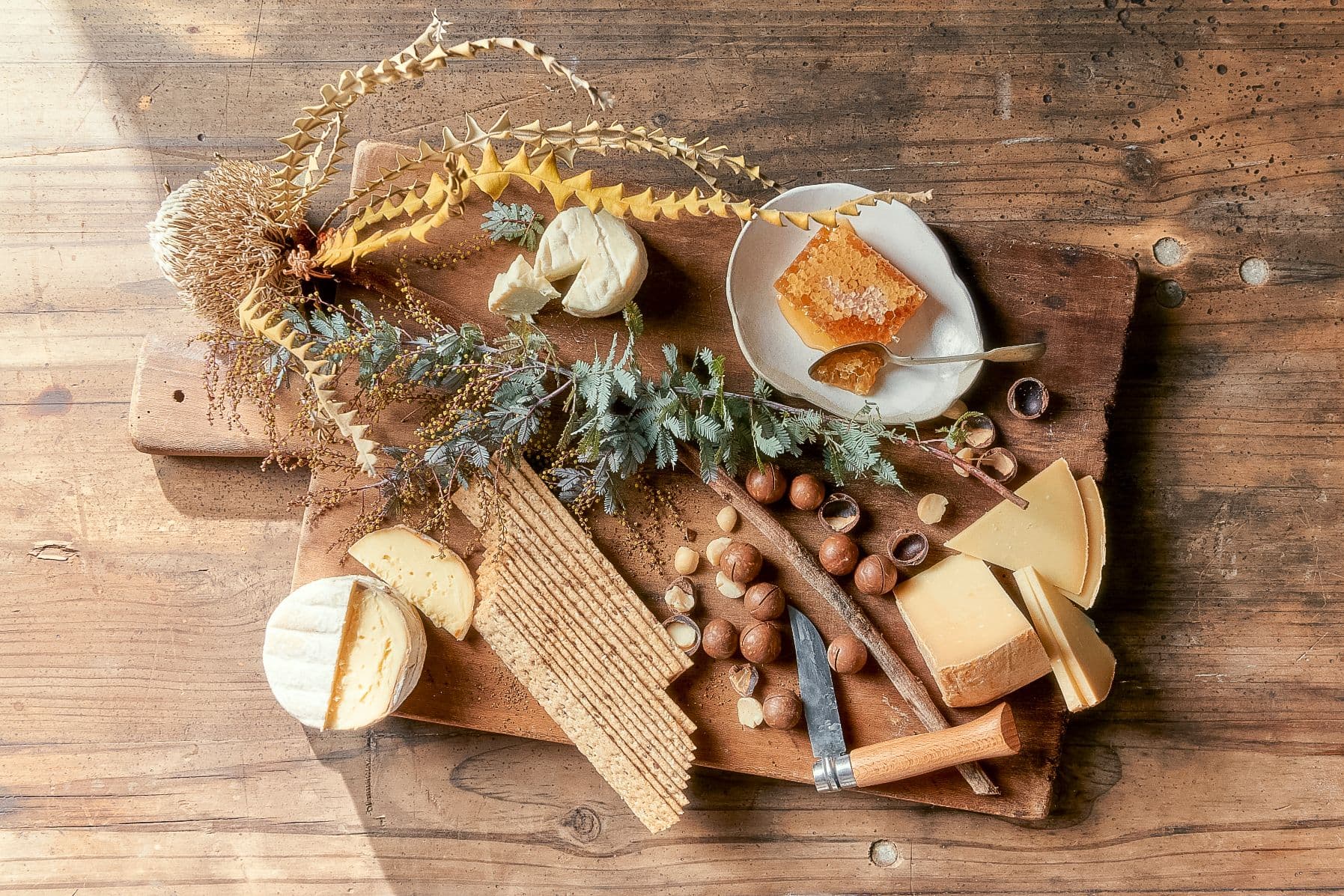
Five cheesemakers rank high on our experts’ list of Australian cheese to try.
- Stoney Creek Farm – Located in North Queensland, they are known for producing handcrafted cheeses, including traditional styles made from local milk.
- Long Paddock – Based in Castlemaine, Victoria, this is a small artisan producer with a strong focus on traditional French techniques and local terroir.
- Berry’s Creek – Located in South Gippsland, Victoria, Berry’s Creek is renowned for its award-winning blue cheeses like Oak Blue and Tarwin Blue.
- Dreaming Goat Dairy – A small-scale dairy in Victoria that makes exceptional goat’s cheese, often fresh and soft-ripened styles, using milk from their own herd.
- Pecora Dairy – From Robertson in NSW’s Southern Highlands. They produce single-farm ewe’s milk cheeses including Australia’s first uncooked raw‑milk cheese, celebrating their sheep, land, and terroir.
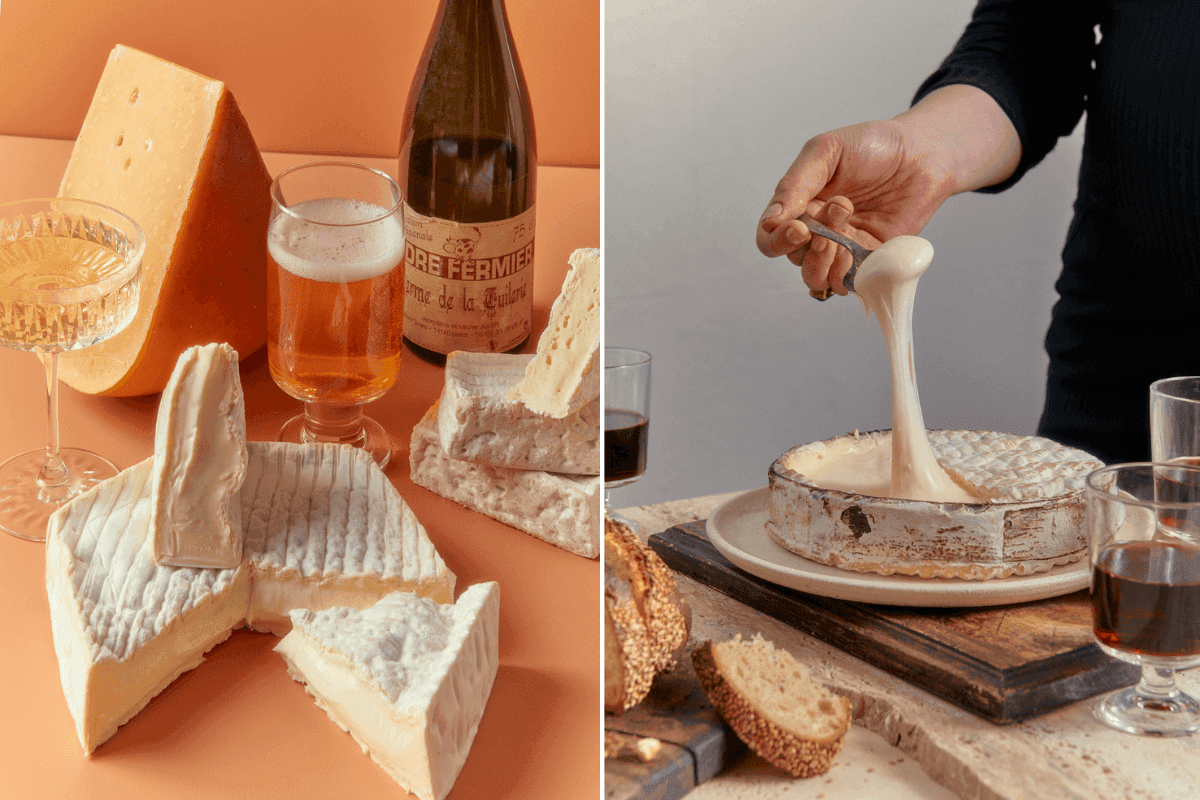
Top notch cheese ideas from our experts
With wine pairing recommendations from Carlos Simeos Santos, My Sommelier Wine Club
Will Studd Le Dauphin Double Crème
A decadent soft-ripened, double cream cheese produced for Will Studd in Bourgogne. Hand-made from local cow’s milk and added cream, curdled using traditional overnight lactic fermentation techniques that date back to monastic times. The protective lidded wooden box and old-fashioned wax-paper wrap create unique micro conditions that allow the carefully selected surface moulds to slowly ripen the fine, chalky interior over 3–4 weeks.
Wine pairing: A creamy chardonnay or a rich, full-body style white to match the creaminess of the cheese but with the acidity to cut through. Try: Vincent Girardin Meursault Vieilles Vignes 2020 or Cullen Kevin John 2024
Driftwood by Long Paddock
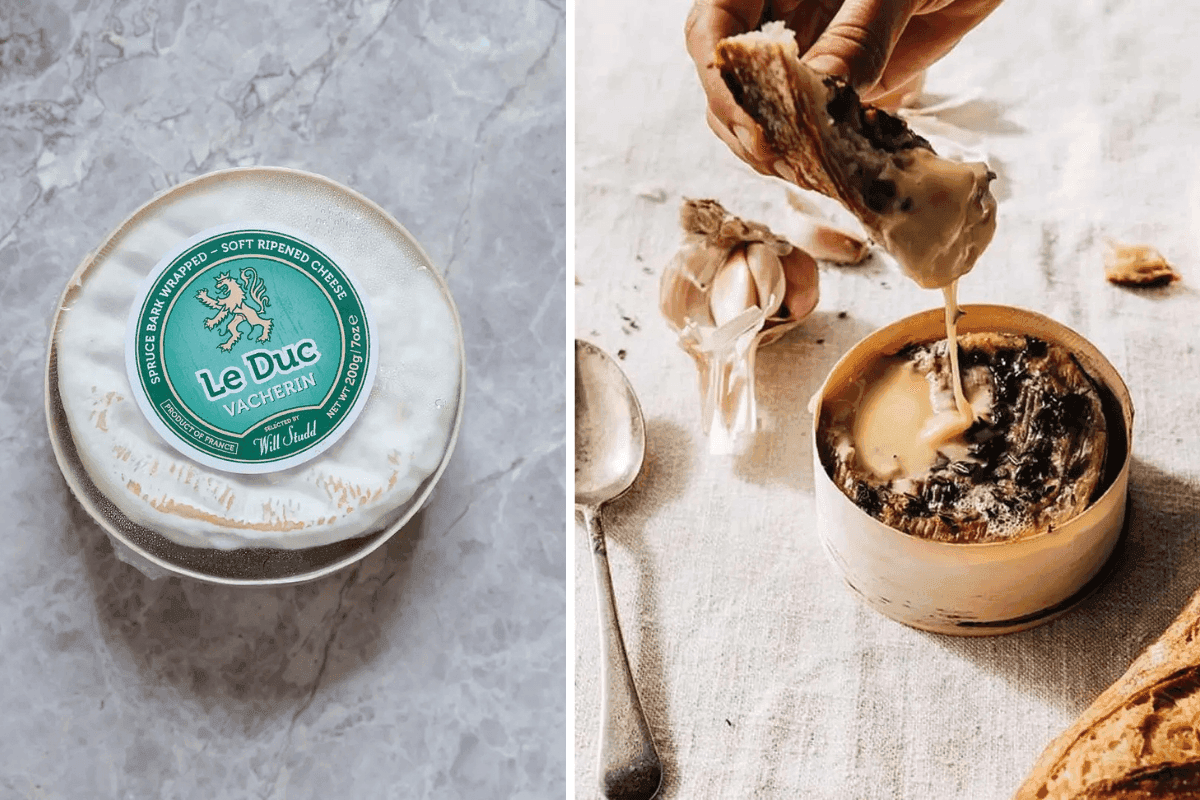
A funky, bark-belted soft cheese in the style of Vacherin Mont d’Or. Delicious eaten as is, or baked in its belt like a mini-fondue. With a thin bloomy rind, the paste is creamy and melty, becoming oozy, runny and spoonable as it ages.
Wine pairing: A sweet, nutty and delicious 20 year old Tawny Port.
Banksia by Long Paddock
A 6–8 month semi-hard Tomme-style cheese made with certified organic cow’s milk. Banksia has a natural rind, with a paste that’s firm and elastic, yet creamy and melty, packed with sweet-grassy and buttery-savoury flavours.
Wine pairing: Champagne goes well with many cheeses without compromise. Try: Larmandier-Bernier Latitude Champagne Blanc de Blancs Extra Brut
Milawa King River Gold
A rich, almost smoky flavour defines this washed rind cheese, with a soft, buttery interior that wins medals. Bold, savoury, yet accessible — a perfect introduction to the washed rind style.
Wine pairing: An interesting match would be a savagnin or savagnin blanc from the Jura region in France, which have plenty of savouriness, character and acidity. Try: Tissot Arbois Savagnin Ouillé ‘Traminer’ 2020.
Jamberoo Blue by Pecora Dairy
A sheep’s milk blue with a sweet, fudgy texture and gentle minerality. It ripens into a creamy, velvety centre balanced by subtle savoury tang — expressive of its terroir in NSW’s Southern Highlands.
Wine pairing: A strong blue works best with sweet wines, either port or sauternes, because of their saltiness-sweetness combination.
Aphrodite Marinated Barrel Aged Feta
An exceptional Greek feta traditionally matured in wooden barrels for a robust, complex flavour. Marinated in olive oil with herbs and peppercorns, this feta is creamy, crumbly, and distinctly savoury, offering a punch of brightness to any board.

https://www.instagram.com/thestuddsiblings/
https://www.amazon.com.au/Best-Things-Life-are-Cheese/dp/1761260308
Note from writer: Headline with apologies to Monty Python’s The Life of Brian: “Blessed are the cheesemakers.”